My path
Built from your Gap Map: what you don't know comes first.
- season
- 1
- rooms
- 32
- hours
- ≈4
- total XP*
- 2760
0/32 rooms · Your progress
* rooms live today
Gap Map · 0/30
Mark each season 1 idea honestly. Your path starts with the red ones, then the yellow. The green ones go last, to confirm in the quiz.
- 01 Everything is data + instructions
- 02 Memory vs storage
- 03 The operating system as a resource manager
- 04 Processes and threads
- 05 Abstraction layers
- 06 Client and server
- 07 DNS: names become addresses
- 08 TCP/IP and guaranteed (or not) delivery
- 09 HTTP/HTTPS and the request/response cycle
- 10 APIs as contracts
- 11 State and variables
- 12 Functions and composition
- 13 Data structures are cost decisions
- 14 Algorithms and complexity (Big-O intuition)
- 15 Object orientation: when it helps
- 16 Functional programming: what to keep
- 17 Relational modelling
- 18 SQL as a language for asking questions
- 19 Indexes and why queries get slow
- 20 Transactions and consistency
- 21 NoSQL: when and why
- 22 Git as history and collaboration
- 23 Tests as a safety net
- 24 Debugging as the scientific method
- 25 CI/CD
- 26 Containers and cloud (the minimum that matters)
- 27 Monolith vs microservices (trade-offs)
- 28 Queues and async processing
- 29 Cache
- 30 Scalability and observability
Not marked
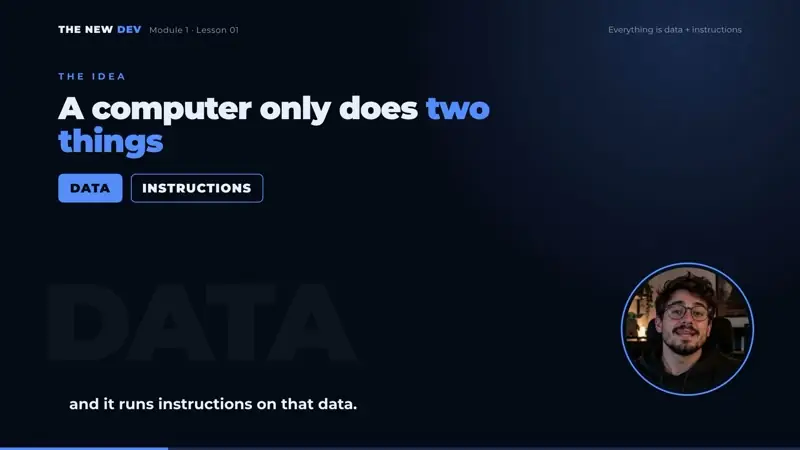 01Everything is data + instructions3:12+90 XP terminalfree
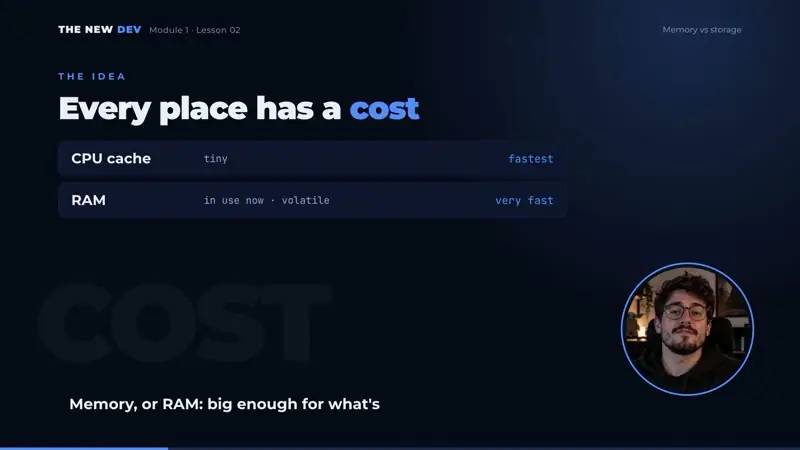 02Memory vs storage3:17+90 XP terminal
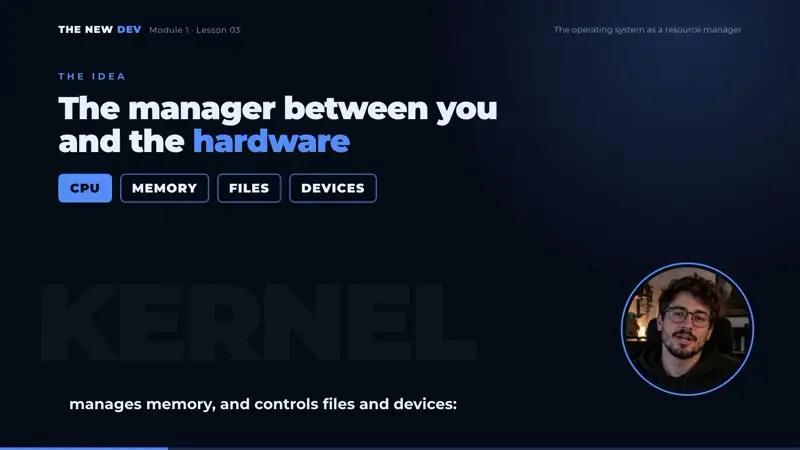 03The operating system as a resource manager2:55+95 XP scenario
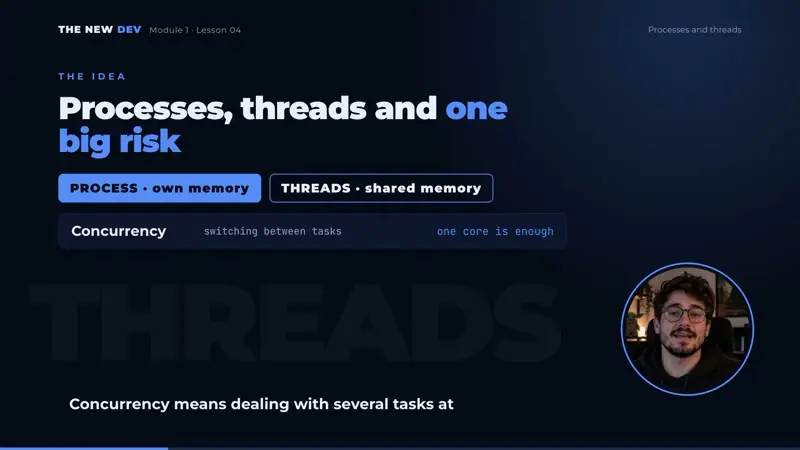 04Processes and threads3:08+95 XP code
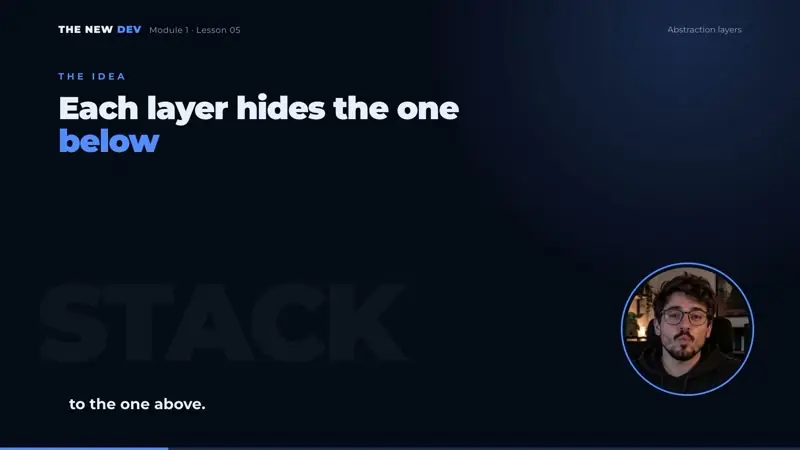 05Abstraction layers2:56+95 XP terminal
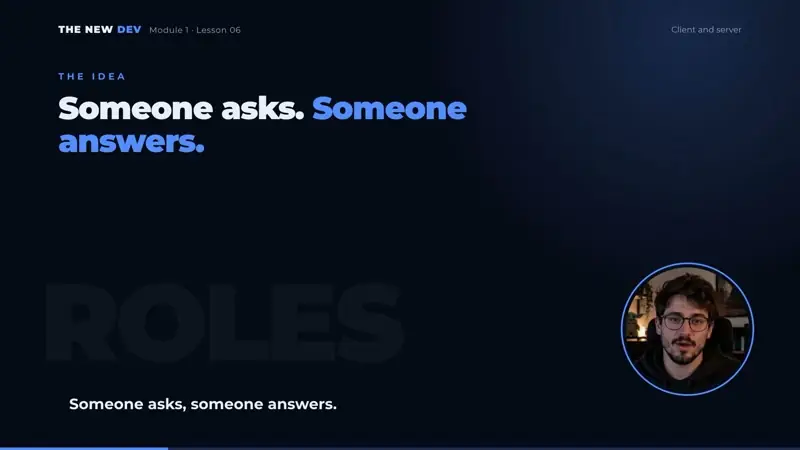 06Client and server2:58+65 XP scenario
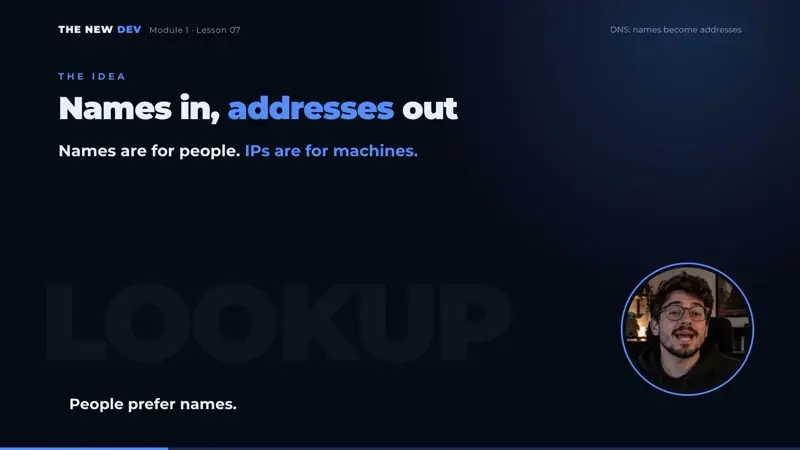 07DNS: names become addresses3:01+95 XP terminal
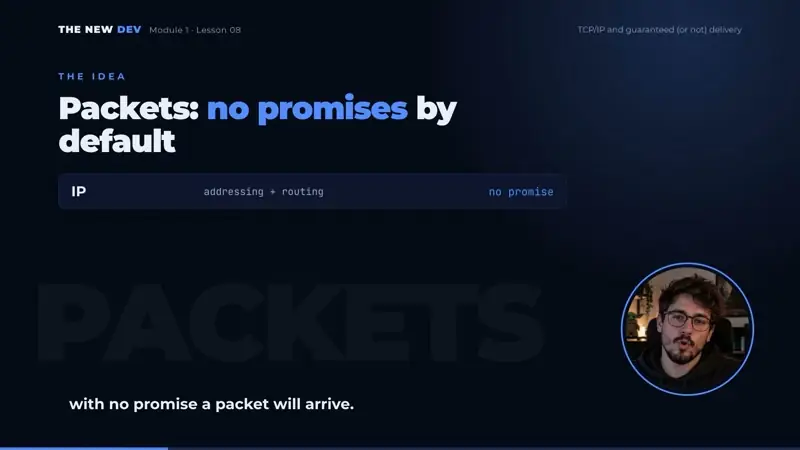 08TCP/IP and guaranteed (or not) delivery2:59+90 XP code
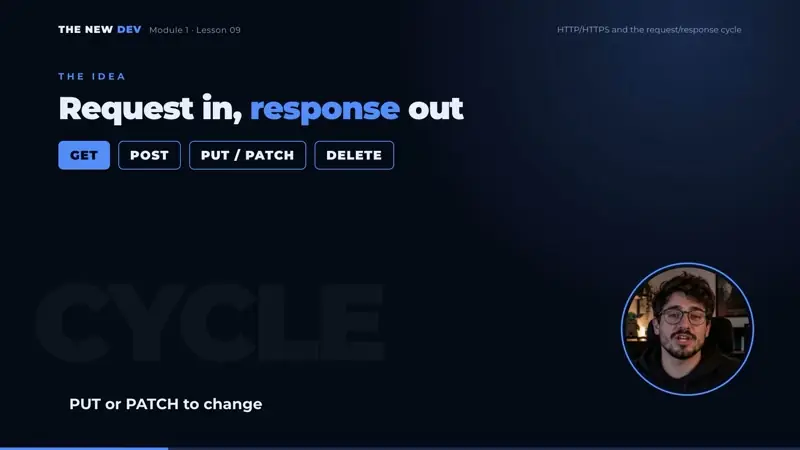 09HTTP/HTTPS and the request/response cycle3:18+90 XP terminal
 10APIs as contracts2:57+95 XP terminal
 11State and variables2:56+90 XP terminal
 12Functions and composition2:57+80 XP code
 13Data structures are cost decisions3:04+65 XP code
 14Algorithms and complexity (Big-O intuition)3:04+90 XP code
 15Object orientation: when it helps3:09+75 XP scenario
 16Functional programming: what to keep2:57+85 XP code
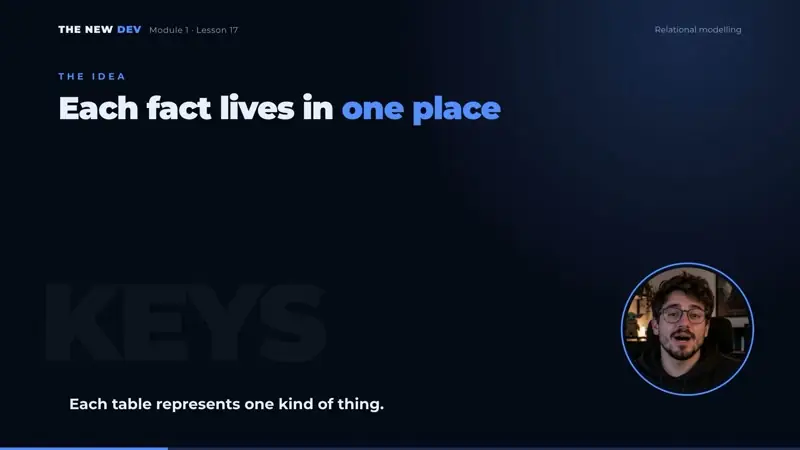 17Relational modelling3:27+95 XP terminal
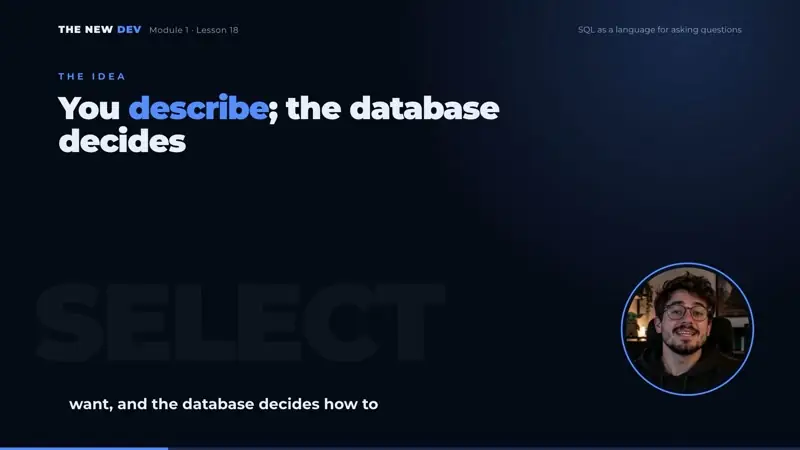 18SQL as a language for asking questions3:14+95 XP terminal
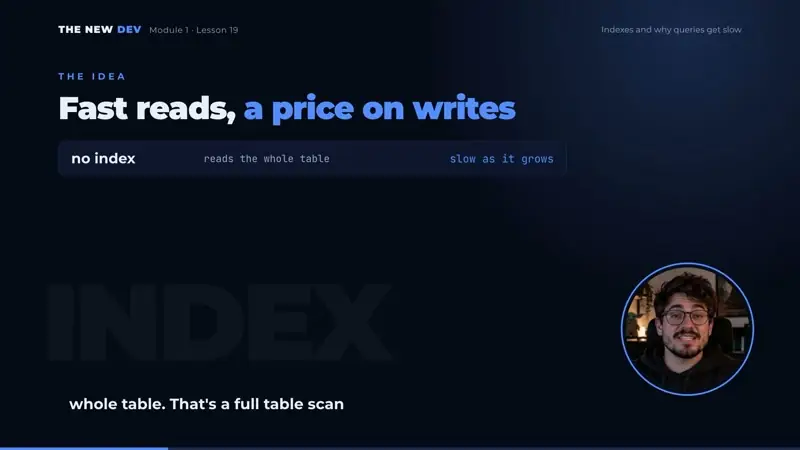 19Indexes and why queries get slow3:00+100 XP terminal
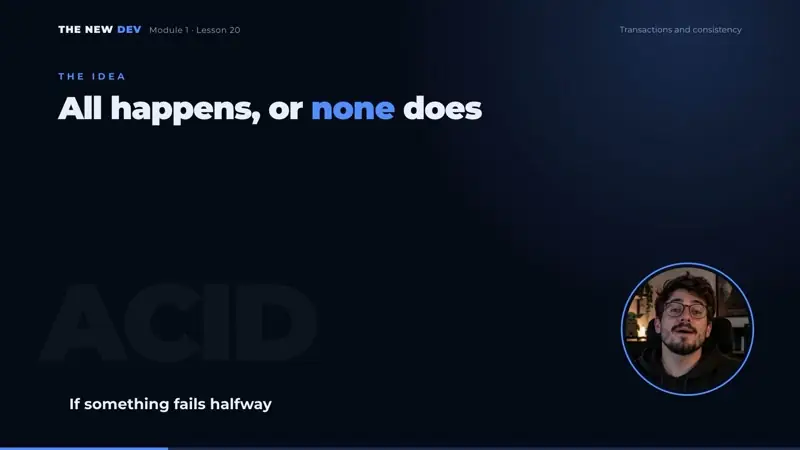 20Transactions and consistency3:15+100 XP code
 21NoSQL: when and why3:25+90 XP scenario
 22Git as history and collaboration3:02+100 XP terminal
 23Tests as a safety net2:58+90 XP code
 24Debugging as the scientific method3:15+80 XP scenario
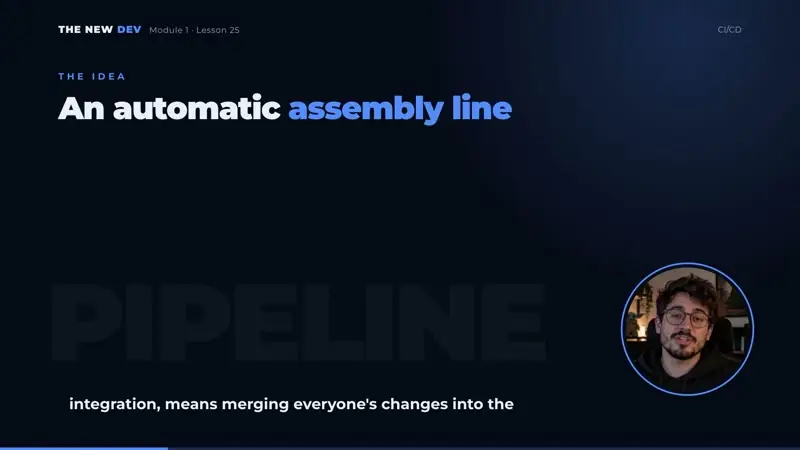 25CI/CD2:52+95 XP terminal
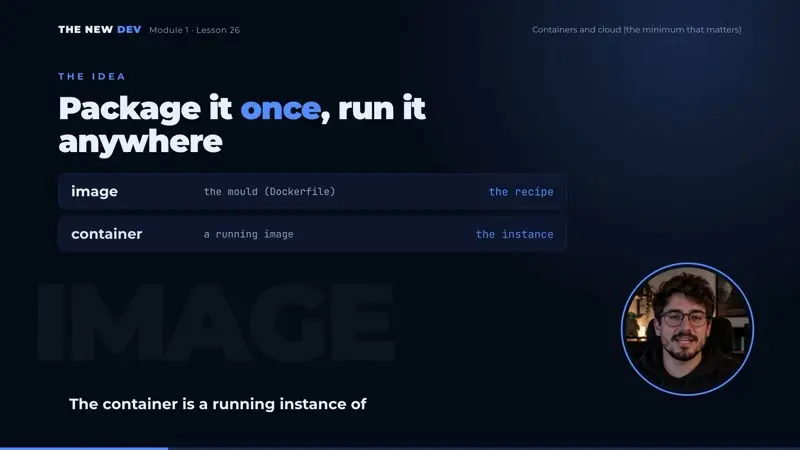 26Containers and cloud (the minimum that matters)3:24+95 XP terminal
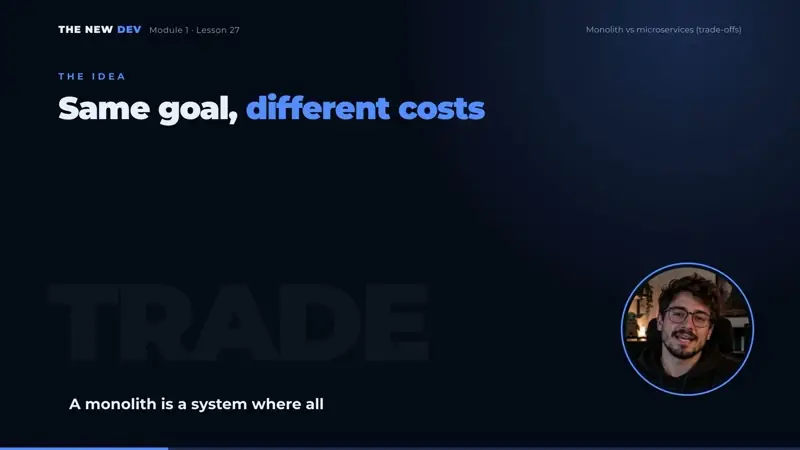 27Monolith vs microservices (trade-offs)3:14+80 XP scenario
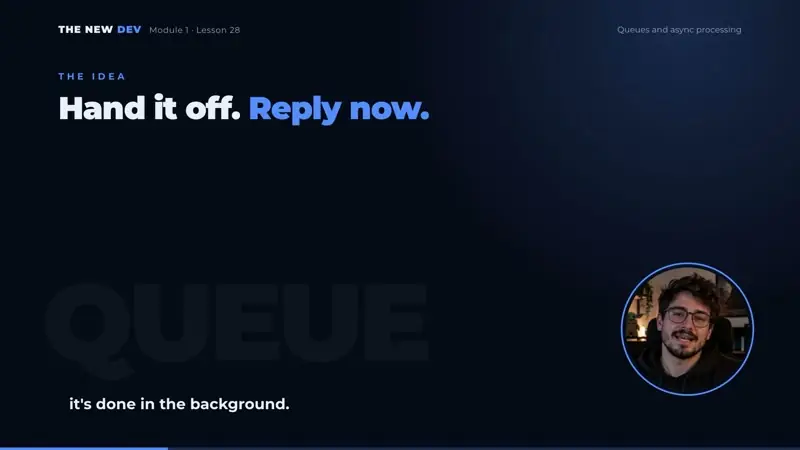 28Queues and async processing3:17+90 XP code
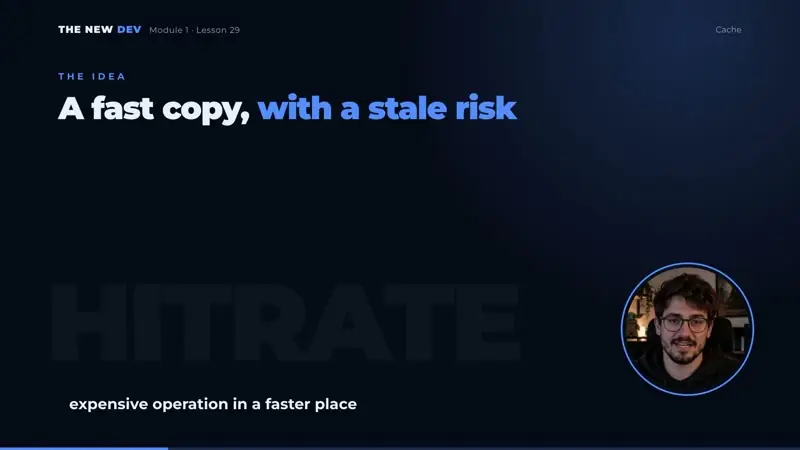 29Cache3:18+90 XP code
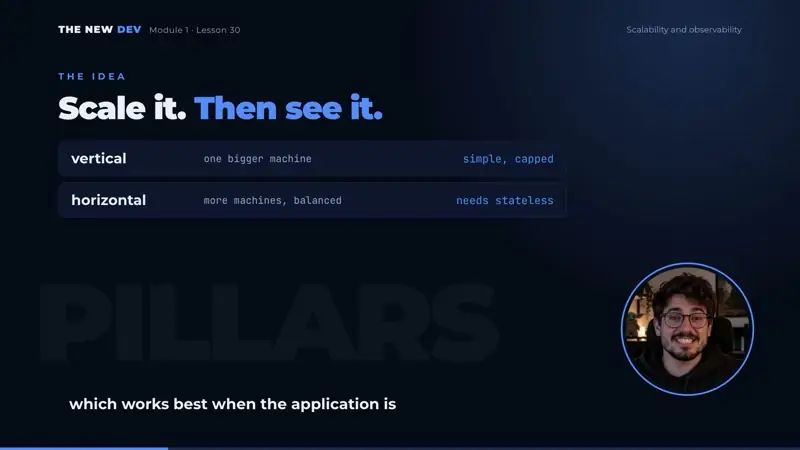 30Scalability and observability3:31+100 XP terminal